You're Not Quitting Your Job — You're Escaping It. Here's How to Land Somewhere Better.
July 23, 2026 · 4 min read · Past the Bots
The Real Reason People Are Quitting
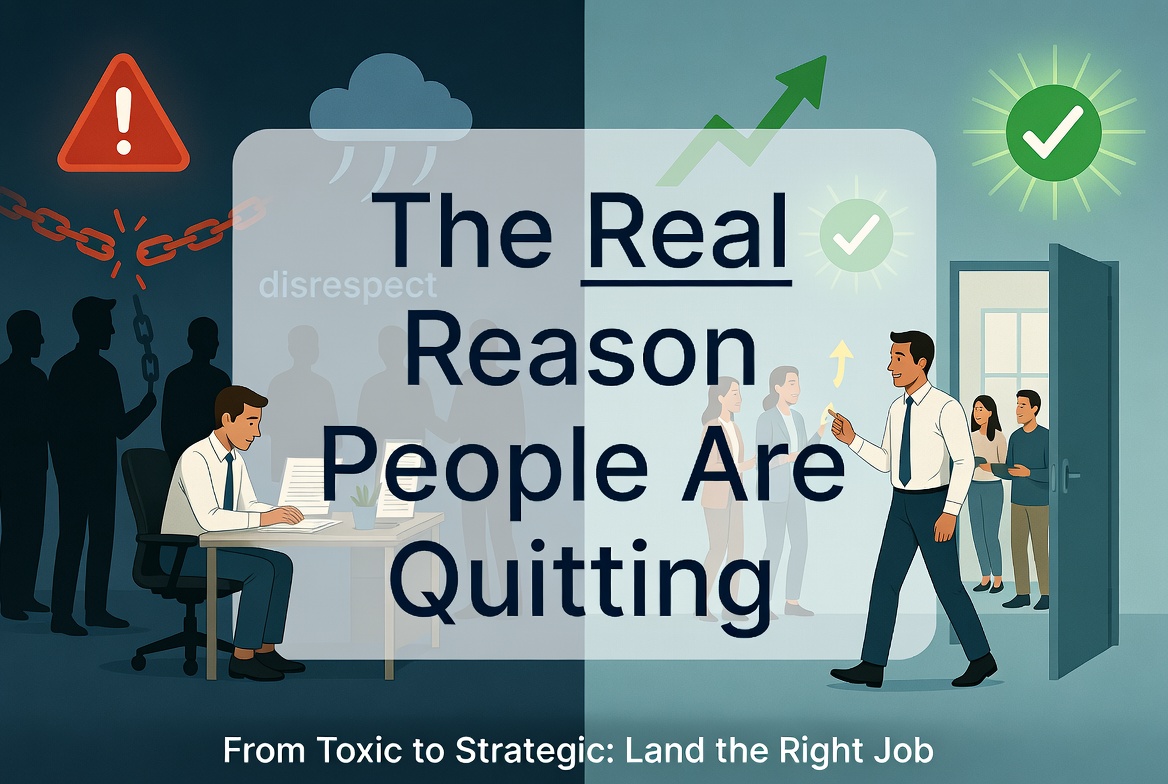
A recent report making the rounds confirms what most of us already knew in our gut: the top reasons workers quit aren't about pay. They're about disrespect and poor leadership. People are walking away from managers who dismiss their input, cultures where they feel invisible, and workplaces that drain more than they give back.
If that sounds familiar, you're in good company. And if you're finally ready to make a move, the instinct is right. But there's a real risk here that nobody talks about enough: leaving a toxic job in a rush and landing in another one just like it.
The antidote to a reactive job search is a strategic one. Let's talk about how to actually do that.
First, Get Clear on What You're Running Toward
Before you update a single bullet point on your resume, spend 20 minutes on this: write down what specifically made your current (or last) job miserable. Be honest. Was it a micromanaging boss? No recognition? A culture that talked about values but didn't live them?
Now flip it. What does the opposite look like? That list becomes your filter for every job description you read. If a JD is heavy on buzzwords like "fast-paced" and "self-starter" but says nothing about team culture, mentorship, or leadership philosophy, that's data.
You're not just trying to get a job. You're trying to get the right job.
Then Make Sure Your Resume Can Actually Get You There
Here's where job seekers lose the plot: they do all this soul-searching about what they want, then send out a resume that was written for a role they had three years ago. Or worse, they apply to 50 jobs with the same generic document and wonder why they're not hearing back.
Applicant Tracking Systems (ATS) are the first filter between you and a human. If your resume doesn't parse correctly or doesn't reflect the language in the job description, it gets buried before anyone reads it.
A few things that genuinely help:
- Match your language to the job description. If the posting says "people management" and your resume says "team oversight," an ATS might not connect those. Use their words.
- Check what the bots actually see. Tools like the ATS scan on Past the Bots show you exactly what a system extracts from your resume: your name, contact info, skills, section headers. You might be surprised how much gets lost in translation.
- Close the skills gap intentionally. The skill-match feature compares your resume against a specific job description and surfaces what's missing. If a role lists "stakeholder communication" as a core requirement and you have it but haven't called it out, that's an easy fix.
Tailor Without Fabricating
One thing that trips people up: they know they're supposed to tailor their resume for each job, but they're not sure how to do it without either lying or spending four hours rewriting everything.
The goal isn't to invent experience you don't have. It's to surface the experience you do have in the language the employer is using. If you spent two years navigating a dysfunctional team under bad leadership and still delivered results, that's a story worth telling. You just have to frame it in terms of outcomes, not complaints.
AI tailoring tools can help here by suggesting rewrites to your existing bullets that align with a job description, without putting words in your mouth about things you haven't done. That's a meaningful distinction.
Don't Forget the Human Side of the Search
Your resume gets you the interview. The interview is where you vet them as much as they vet you.
Come prepared with questions that actually reveal culture:
- "How does leadership typically respond when someone pushes back on a decision?"
- "Can you tell me about someone who's grown within the team recently?"
- "What does accountability look like here when something goes wrong?"
These questions signal that you're thoughtful and that you're not going to take just any offer. That actually makes you more attractive to good employers, not less.
A Bad Job Is Expensive. A Good Search Is Worth It.
Staying too long in a job that disrespects you has real costs: to your confidence, your health, and your career trajectory. But a panicked exit that lands you somewhere just as bad is its own tax.
Take the time to do the search right. Get your resume in front of the right systems, match it to the right roles, and ask the right questions when you get to the table. The goal isn't just to get past the bots. It's to get to a place where Monday doesn't feel like a punishment.